Automated packaging systems for the end of your production line, from palletising and shrink wrapping to lidding.
A packaging system brings together every station that makes a finished product ready for dispatch: stacking, securing, closing. It sits at the end of the production line, takes the goods from filling or manufacturing and passes them on palletised and secured to storage and shipping.
A packaging machine is the individual station; a packaging system or packaging line is several stations linked together with the conveyor technology in between. For sizing, the second level is the decisive one, because throughput and fault rate are decided at the transfer points, not at the individual machine.
Semi-automatic packaging solutions handle one step while infeed or pallet changes are done by hand. That is the right stage for moderate volumes, changing products or a limited budget, and it can be extended later.
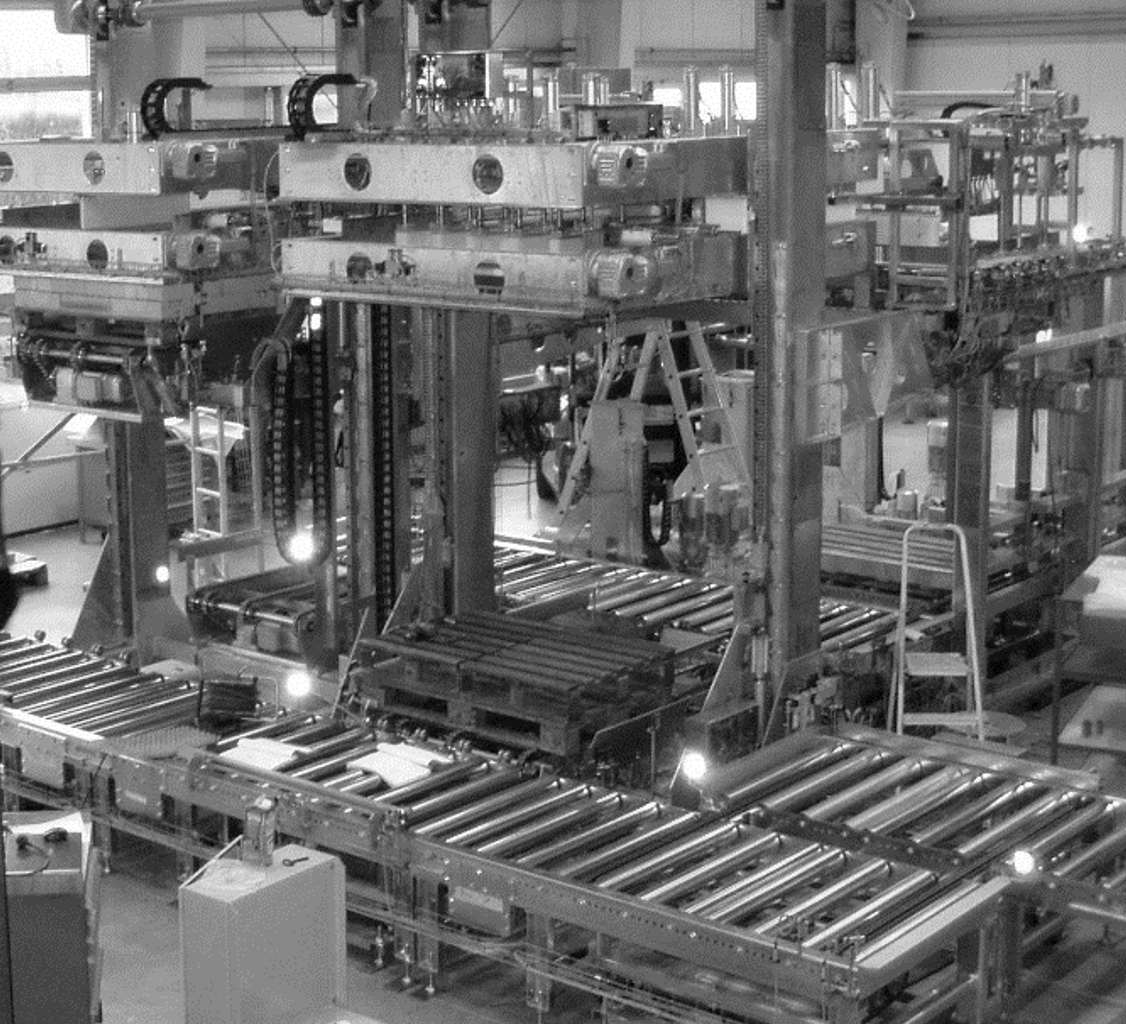
Automatic packaging systems link the steps end to end: products come in on conveyors, are palletised layer by layer, secured with film and run out ready for dispatch. There is no fixed boundary between the two stages, only a series of individual decisions about which steps form the bottleneck.
Because these stages build on one another, it pays to consider the later stage while planning the first. Floor space, transfer heights and the control concept determine what can be retrofitted without a rebuild.
Packaging systems from Tomasic are used in food production, consumer goods manufacturing, the building materials industry and logistics, wherever products have to be made ready for dispatch in larger quantities.
Depending on your product range, we combine palletising, shrink wrapping and lidding into a continuous packaging line that connects to your existing filling line.
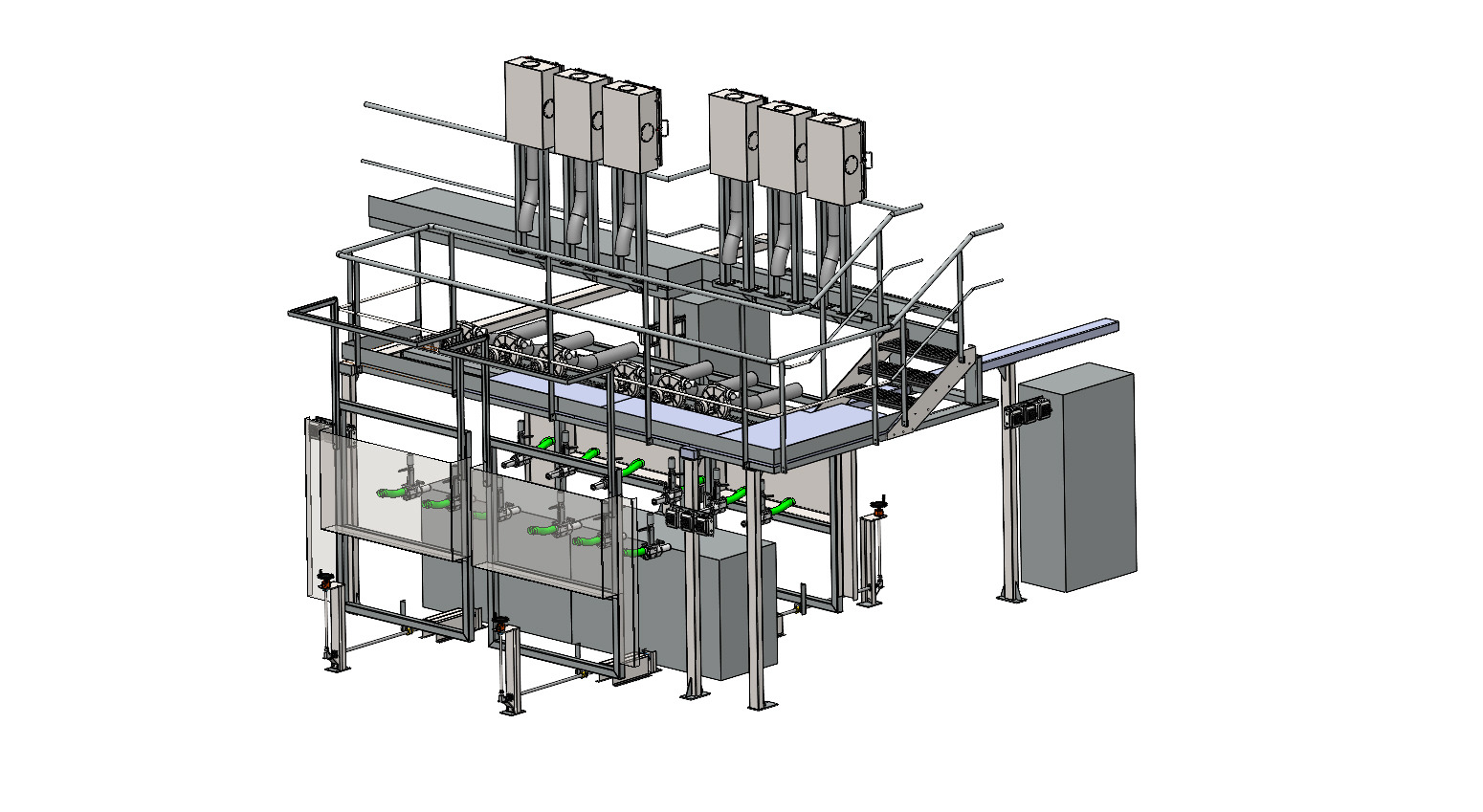
We plan packaging systems to match product weight, packaging type and required throughput, and connect them to existing lines. As a special machinery builder, the conveyor technology between the stations comes from the same source as the stations themselves, which simplifies matching the transfer points.
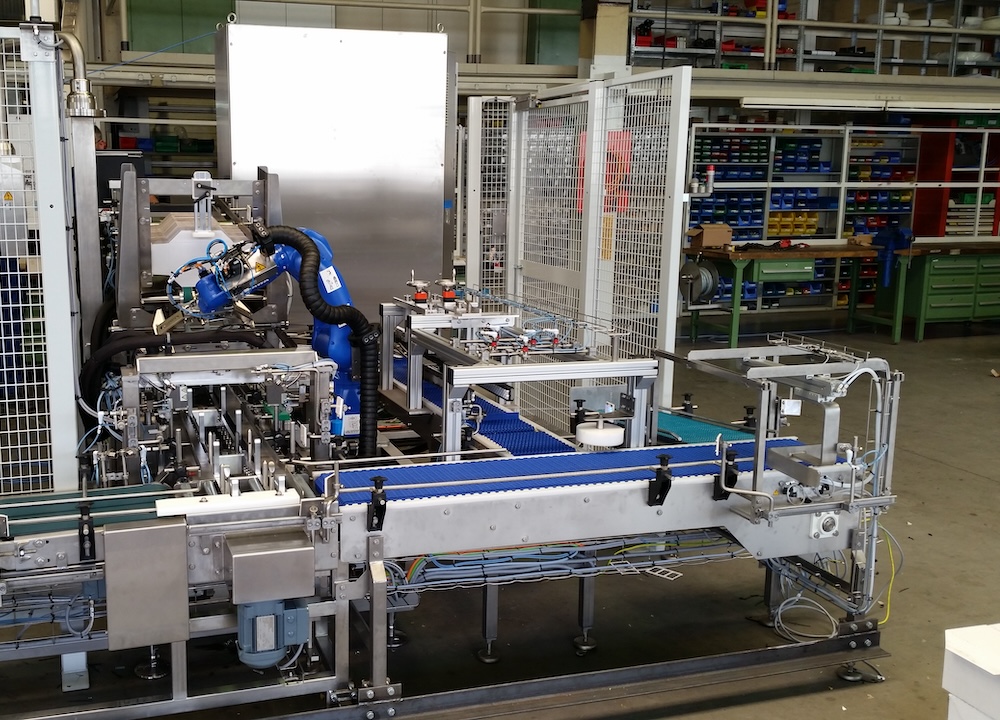
It depends on product shape, packaging type and required cycle rate: palletising suits shipping large quantities, shrink-wrapping suits transport protection for individual products or multipacks, and lid applicators suit automatically sealing containers. During the design consultation, we determine the right combination for your application.
Yes, new packaging technology can generally be connected well to existing filling and production lines, provided transfer points and cycle times are coordinated. We assess on site how the new system can be integrated into your existing line.
Space requirements depend on the type of system and level of automation — from a few square metres for a single palletising station to a larger area for a fully automated line with a layer former and stretch wrapper. We design the system to match your available space.
In a semi-automatic solution the system handles one step while infeed, pallet changes or removal are done by hand. An automatic packaging system links these steps end to end via conveyors. Which stage fits depends less on budget than on which step is actually your bottleneck. Both stages can build on one another if floor space and transfer heights are designed for it from the start.